What is a Natal Chart in Astrology? Complete Guide to Your Birth Chart
Introduction to Natal Charts
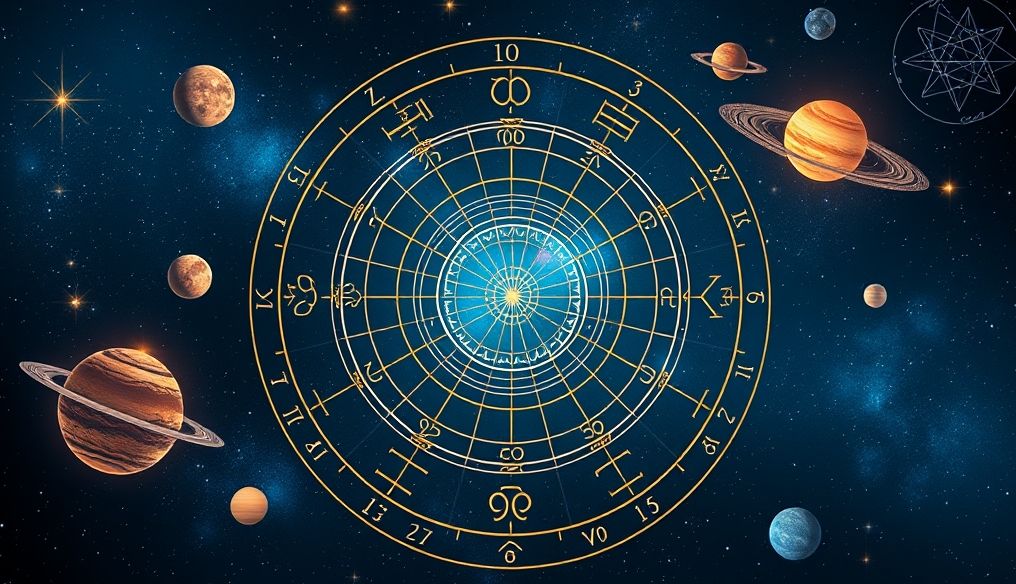
A natal chart, also known as a birth chart or horoscope, is one of the most fundamental tools in astrology. It's a personalized snapshot of the sky at the exact moment and location of your birth. This celestial map serves as your cosmic blueprint, revealing your personality traits, life purpose, relationships, and potential challenges.
Understanding your natal chart can provide profound insights into who you are and help you navigate life's journey with greater awareness and intention.
What Exactly is a Natal Chart?
Definition and Purpose
A natal chart is a two-dimensional representation of the three-dimensional positions of celestial bodies—the Sun, Moon, planets, and other significant points—at your birth moment. Astrologers use precise astronomical data to calculate these positions and create a detailed map of the heavens as they appeared above your birthplace.
The primary purpose of a natal chart is to:
- Reveal your personality and innate characteristics
- Identify your life lessons and spiritual growth opportunities
- Understand relationship dynamics with others
- Discover your career path and vocational talents
- Navigate challenges with greater awareness
- Unlock your potential and purpose
The Three Essential Elements
Every natal chart contains three critical components:
1. The Sun Sign (Core Identity)
Your Sun sign represents your core essence, ego, and fundamental identity. It's what most people refer to when they ask "What's your sign?" The Sun sign indicates your basic personality traits, creative expression, and life purpose.
Sun signs include:
- Aries, Taurus, Gemini, Cancer, Leo, Virgo, Libra, Scorpio, Sagittarius, Capricorn, Aquarius, and Pisces
2. The Moon Sign (Emotional Nature)
Your Moon sign governs your emotional world, inner needs, and subconscious patterns. While the Sun sign represents how others perceive you, the Moon sign reveals your private, emotional self—your instinctive reactions and deepest feelings.
The Moon sign is crucial for understanding:
- Emotional responses and triggers
- Comfort and security needs
- Nurturing style
- Inner peace requirements
3. The Rising Sign (Ascendant - First Impression)
Also called the Ascendant, your Rising sign is the zodiac sign that was on the eastern horizon at your birth moment. It represents the "mask" you wear in public—how others perceive you at first meeting and your outward personality.
The Ascendant influences:
- Physical appearance and presentation
- First impressions
- Social behavior
- Personality expression in public
The Twelve Houses in Your Natal Chart
The natal chart is divided into twelve sections called houses, each governing different life areas:
House Breakdown
| House | Area of Life |
|---|---|
| 1st House | Self, appearance, personality |
| 2nd House | Money, possessions, values |
| 3rd House | Communication, siblings, short trips |
| 4th House | Home, family, roots, foundation |
| 5th House | Creativity, romance, children, pleasure |
| 6th House | Health, work, daily routines |
| 7th House | Partnerships, marriage, relationships |
| 8th House | Transformation, shared resources, intimacy |
| 9th House | Higher learning, travel, philosophy |
| 10th House | Career, public image, authority |
| 11th House | Friendships, groups, aspirations |
| 12th House | Spirituality, hidden matters, karma |
The Planets and Their Meanings
In astrology, planets represent different energies and aspects of human experience:
Personal Planets
- Sun - Core identity and life purpose
- Moon - Emotions and inner needs
- Mercury - Communication and thinking style
- Venus - Love, values, and attraction
- Mars - Passion, drive, and action
Social Planets
- Jupiter - Expansion, luck, and growth
- Saturn - Discipline, limitations, and responsibility
Generational Planets
- Uranus - Innovation, rebellion, and change
- Neptune - Dreams, spirituality, and imagination
- Pluto - Transformation, power, and rebirth
How to Read Your Natal Chart
Step 1: Gather Your Birth Information
To create an accurate natal chart, you need:
- Exact birth date (day, month, year)
- Exact birth time (hour and minute)
- Birth location (city and country)
Your birth time is particularly important because it determines your Ascendant and house positions. If you don't know your exact birth time, check your birth certificate or contact the hospital where you were born.
Step 2: Use a Natal Chart Calculator
Several websites and apps provide free natal chart calculations:
- Astro.com
- Cafe Astrology
- Astrology King
- Co-Star
- The Pattern
Simply enter your birth information, and the tool will generate your natal chart.
Step 3: Identify Your Big Three
Begin by identifying your:
- Sun sign - Your core identity
- Moon sign - Your emotional nature
- Rising sign - Your outward personality
These three signs form the foundation of your astrological profile.
Step 4: Explore Planetary Placements
Next, examine where each planet falls in your chart:
- Which sign is each planet in?
- Which house does each planet occupy?
- What aspects (angles) do planets make with each other?
Each placement adds layers of meaning to your personality and life experiences.
Step 5: Study Aspects and Patterns
Aspects are angles between planets that create harmony or tension:
- Conjunction (0°) - Blended energies
- Sextile (60°) - Harmonious support
- Square (90°) - Tension and growth
- Trine (120°) - Easy flow and talent
- Opposition (180°) - Polarity and balance
Key Differences: Natal Chart vs. Daily Horoscope
Many people confuse natal charts with daily horoscopes:
Natal Chart
- Static - Created once at birth
- Personal - Unique to each individual
- Comprehensive - Reveals personality and potential
- Timeless - Remains relevant throughout life
Daily Horoscope
- Dynamic - Changes daily, monthly, yearly
- General - Applies to entire zodiac signs
- Predictive - Forecasts upcoming events
- Temporary - Relevant for specific time periods
Why Your Natal Chart Matters
Self-Understanding
Your natal chart provides a mirror to your soul, helping you understand why you react certain ways, what truly motivates you, and what brings you fulfillment.
Relationship Insights
Comparison of natal charts (called synastry) reveals compatibility patterns, potential challenges, and how you complement each other with partners.
Career Guidance
Your natal chart highlights natural talents, vocational strengths, and career paths aligned with your cosmic blueprint.
Personal Growth
Understanding your chart's challenges and strengths provides a roadmap for personal development and spiritual evolution.
Decision Making
Many people consult their natal charts when making major life decisions about relationships, careers, relocations, or life changes.
Common Misconceptions About Natal Charts
Myth 1: "Your Sun Sign is Everything"
Reality: While your Sun sign is important, your complete natal chart—including Moon, Rising, and planetary placements—provides a much fuller picture of who you are.
Myth 2: "Natal Charts Determine Your Fate"
Reality: Your natal chart shows potential and tendencies, not fixed destiny. You have free will to make choices and create your life.
Myth 3: "You Need Exact Birth Time"
Reality: While exact time is ideal, approximate times can still provide valuable insights. However, the Ascendant and house positions require precise timing.
Myth 4: "Your Chart Never Changes"
Reality: Your natal chart remains the same, but current planetary movements (transits) interact with your chart, creating dynamic changes in life experiences.
Advanced Natal Chart Concepts
Nodes of the Moon
The North Node and South Node represent your soul's evolutionary path:
- South Node - Past life talents and patterns to release
- North Node - Future growth and soul lessons
Chiron (The Wounded Healer)
Chiron represents your deepest wound and greatest healing gift. Understanding your Chiron placement helps you transform pain into wisdom.
Midheaven (MC)
The Midheaven represents your career, public image, and life direction—your highest potential expression in the world.
Vertex
The Vertex is the "fated point" in your chart, often associated with destined encounters and significant relationships.
Getting Started with Your Natal Chart
Beginner Steps
- Generate your natal chart using a free online calculator
- Learn your Big Three (Sun, Moon, Rising)
- Research what each sign means in each placement
- Reflect on how descriptions resonate with your life
- Explore planetary placements gradually
- Consider consulting a professional astrologer for deeper insights
Resources for Learning
- Books: "The Inner Sky" by Steven Forrest, "Astrology for the Soul" by Jan Spiller
- Websites: Astro.com, Cafe Astrology, Astrology Hub
- Apps: Co-Star, The Pattern, Sanctuary
- Courses: Online astrology courses through Udemy, Skillshare
Conclusion
Your natal chart is a powerful tool for self-discovery and personal growth. It's a unique cosmic blueprint that reveals your personality, potential, and life path. While it doesn't determine your fate, understanding your chart can help you:
- Embrace your authentic self
- Navigate relationships with greater awareness
- Make aligned life decisions
- Understand your strengths and challenges
- Connect with your deeper purpose
Whether you're a curious beginner or a devoted astrology enthusiast, exploring your natal chart is a rewarding journey of self-understanding. Start with your Big Three, gradually deepen your knowledge, and watch as the stars reveal the cosmic truth of who you are.
Ready to explore your natal chart? Generate yours today and begin your astrological journey!